
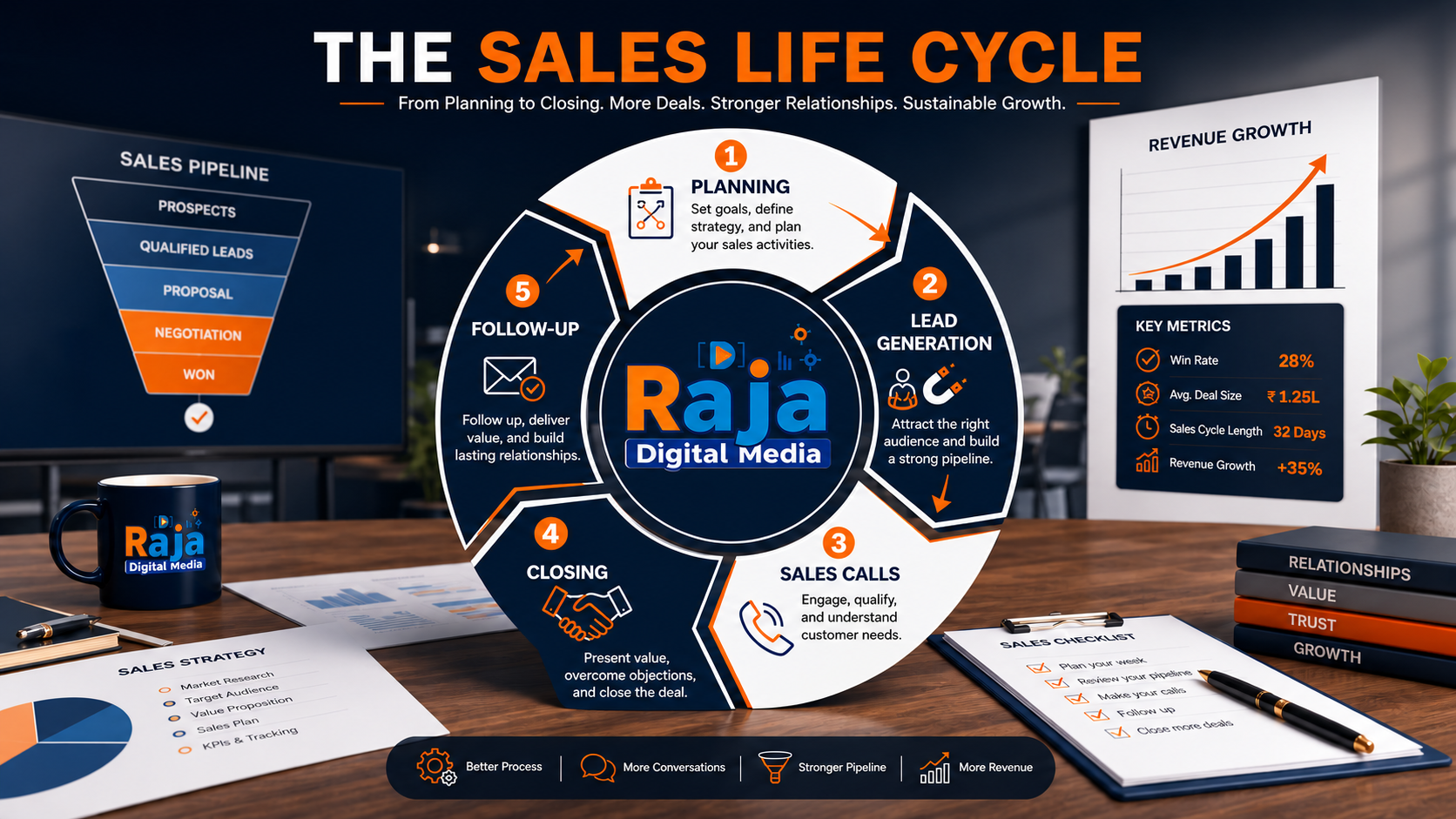
Many businesses struggle with sales not because demand is missing, but because the process is inconsistent. Leads come in, follow-up varies, calls are not always qualified, and valuable opportunities slip through the cracks.
That is where a clear sales life cycle becomes useful. When your team understands what should happen at each stage, sales becomes more measurable, more repeatable, and more effective.
The four core stages are planning, filling the pipeline, sales calls, and closing with follow-up. Each stage supports the next, and weak performance in one area usually affects conversion across the whole system.
Clear goals, audience focus, and sales activity targets create direction before outreach begins.
A healthy pipeline keeps future revenue moving instead of depending on last-minute selling.
Many deals are won after the first conversation through consistent and timely follow-up.
1. Planning Sales Activities
The sales life cycle begins with planning. Before calls, messages, or campaigns start, the business needs clarity around target customers, ideal offers, outreach channels, and the sales goals for the period.
This stage is where businesses define what kind of lead matters most, what objections are likely to appear, and what actions the team must take each week to keep momentum steady.
- Set realistic lead and revenue targets
- Define the ideal customer profile
- Align offers with customer pain points
- Plan weekly outreach and follow-up activity
- Prepare sales scripts, FAQs, and qualification criteria
2. Filling the Pipeline With Opportunities
Once planning is in place, the next job is creating opportunity flow. This means bringing in leads through channels such as referrals, Meta Ads, Google Ads, SEO, local search, website enquiries, and outbound efforts.
The goal is not just to collect contact details. It is to attract the kind of prospects that match the business offer and can realistically move forward in the sales process.
A well-built pipeline gives the sales team enough quality conversations to work with, which reduces pressure and improves consistency.
3. Qualifying and Running Better Sales Calls
Sales calls are where interest turns into real evaluation. At this stage, the business needs to understand the prospect situation, identify urgency, confirm fit, and explain the offer in a way that connects to actual needs.
Not every lead should move forward. Qualification helps the team spend time where conversion is most likely while also improving the customer experience.
Better calls usually come from better listening, sharper discovery questions, and a more structured explanation of value rather than hard selling.
- Confirm business need and current challenge
- Understand timeline, budget, and decision-making process
- Explain outcomes instead of only features
- Handle objections with clarity, not pressure
- Agree on the next step before ending the conversation
4. Closing and Following Up
Closing does not always happen in a single call. Many prospects need time, internal approval, or more confidence before making a decision. That makes follow-up a core part of closing, not a separate afterthought.
Strong follow-up keeps the opportunity alive without becoming pushy. It reminds the prospect of the value discussed, answers remaining questions, and guides the conversation toward a clear decision.
Businesses that combine consistent follow-up with tools like lead automation often respond faster and lose fewer warm opportunities.
Why the Sales Life Cycle Matters for Business Growth
A defined sales life cycle helps teams identify where deals are slowing down. If planning is unclear, outreach becomes scattered. If pipeline generation is weak, sales calls become inconsistent. If calls are poor, closing suffers. If follow-up is delayed, warm leads go cold.
That is why sales performance should be seen as a system, not a one-stage event. The businesses that grow most reliably are often the ones that build discipline into every stage instead of depending on individual effort alone.
This also connects closely with digital marketing. Better SEO, stronger Google Ads, and conversion-focused website design all strengthen the top of the sales cycle by bringing in better opportunities.
How to Improve Your Current Sales Process
Start by mapping your current sales flow honestly. Where are leads coming from? How quickly are they contacted? How are they qualified? How many deals are being lost because there is no follow-up rhythm?
Once those answers are clear, you can improve the process step by step. Small improvements at each stage often produce stronger results than trying to force better closing alone.
- Track lead sources and conversion by stage
- Reduce response time to new enquiries
- Standardize qualification questions
- Create a follow-up schedule for warm leads
- Use reporting to find the real bottleneck
Frequently Asked Questions
What is the sales life cycle?
The sales life cycle is the full journey from planning sales activity and generating leads to qualifying prospects, closing deals, and following up.
Why is follow-up important in sales?
Follow-up is important because many prospects do not decide immediately. Timely follow-up keeps opportunities warm and improves conversion rates.
How can small businesses improve their sales process?
Small businesses can improve by defining clear stages, tracking lead flow, qualifying more carefully, and creating a reliable follow-up system.
How does digital marketing support the sales life cycle?
Digital marketing supports the sales life cycle by generating qualified traffic, attracting enquiries, and feeding the pipeline with better opportunities.
Need More Qualified Leads and Better Conversion Flow?
Raja Digital Media helps businesses strengthen the full growth journey, from lead generation and websites to follow-up systems that support better sales results.
Talk Growth Strategy