Every year, someone declares that SEO is dead. In 2026, the question feels louder because search has changed faster than usual. Google shows richer answers. AI tools summarize information. Social platforms influence product discovery. Paid ads take up valuable space. Customers ask longer, more specific questions and expect instant answers.
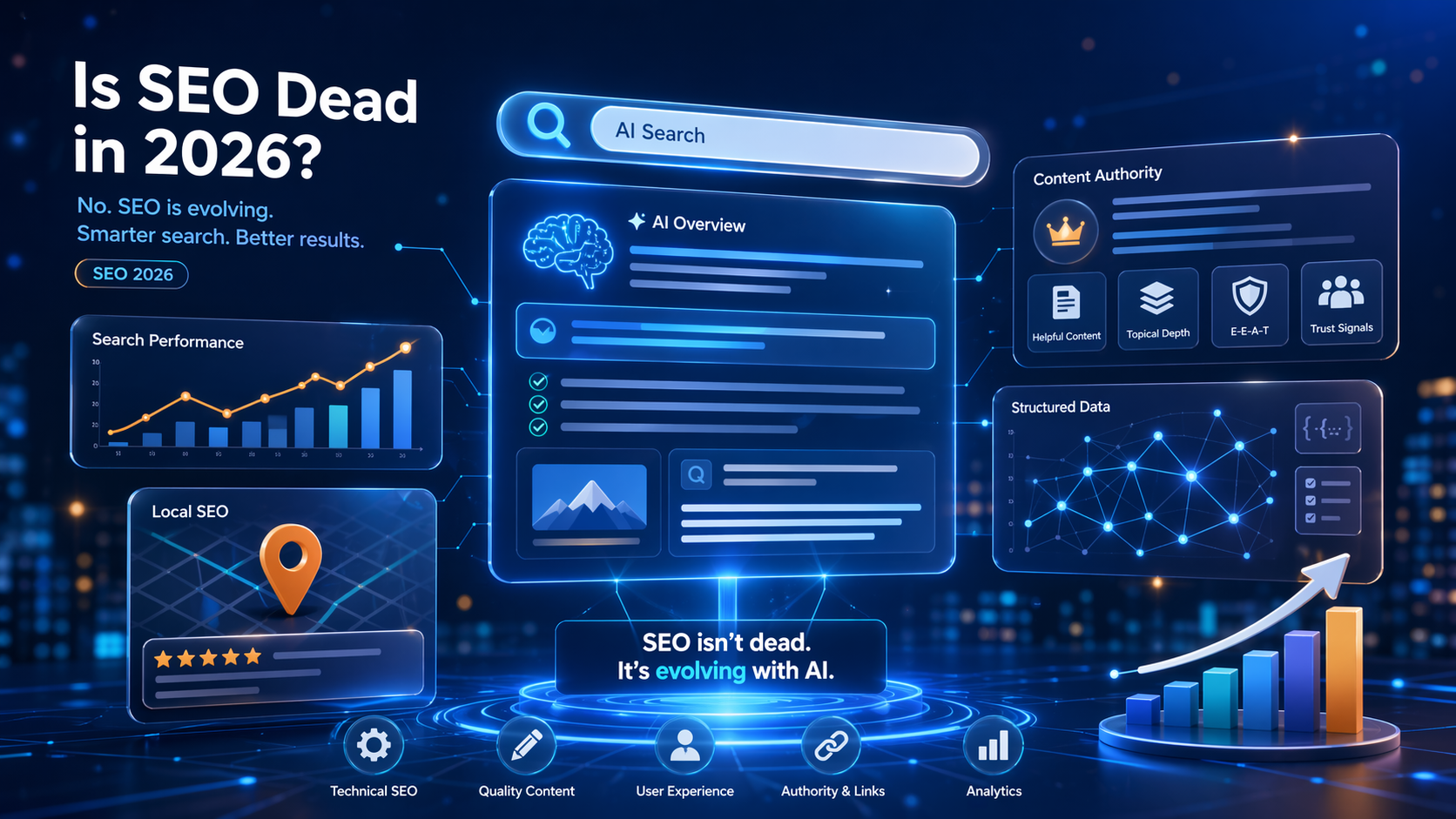
So, is SEO dead in 2026? No. SEO is not dead. Old SEO is dead. The version of SEO that depended on keyword stuffing, thin blogs, spam backlinks, and writing only for search engines is no longer a reliable growth strategy. But modern SEO, built around helpful content, technical quality, local visibility, brand authority, and conversion-focused pages, is still one of the most powerful long-term marketing channels.
For businesses in Karur, Tamil Nadu, and across India, this distinction matters. If you stop investing in SEO because someone says AI has killed search, you give your competitors room to own the exact moments when customers are looking for services like yours. If you adapt your SEO strategy to how search works now, you can still win high-intent visibility and turn organic traffic into leads.
Why People Think SEO Is Dead
The fear is understandable. Many businesses have watched organic traffic become less predictable. Some informational searches now get answered directly on the search results page. AI systems can summarize content without sending every user to the original website. Social platforms like YouTube, Instagram, LinkedIn, and TikTok have become search engines in their own right. For some industries, paid ads and marketplace listings dominate the top of the page.
On top of that, businesses that relied on low-quality SEO tactics have been hit hard. A site that publishes generic AI-written articles, copies competitor content, ignores technical issues, and builds irrelevant backlinks will struggle. That does not mean SEO is dead. It means shortcuts are dying.
Modern search rewards businesses that are clear, useful, trusted, and technically accessible. Google Search Central continues to emphasize helpful, reliable, people-first content and strong technical foundations. That aligns with what users want too: useful answers, trustworthy brands, fast pages, and clear next steps.
What SEO Means in 2026
SEO in 2026 is not just about ranking one blog post for one keyword. It is about making your business easy to discover, understand, trust, and contact. That includes your homepage, service pages, blog content, Google Business Profile, reviews, directory listings, social profiles, schema markup, website speed, internal links, and lead capture process.
A strong SEO strategy now answers five business questions:
- Can search engines clearly understand who you are, what you offer, and where you operate?
- Can potential customers find your business for high-intent searches like "SEO services Karur" or "digital marketing agency in Karur"?
- Does your content answer real buyer questions better than competitors?
- Does your website load fast, work well on mobile, and guide visitors toward action?
- Do your brand signals across the web support trust, authority, and local relevance?
If the answer to those questions is yes, SEO is alive for your business. If the answer is no, you do not have an SEO problem alone. You have a visibility and trust problem.
AI Search Did Not Kill SEO. It Raised the Standard.
AI search changed the way people receive answers. Instead of clicking through ten pages, users can ask detailed questions and receive summarized guidance. That means generic content becomes easier to ignore. But it also means high-quality, well-structured, trustworthy content becomes more valuable.
AI systems need sources. They rely on clear entities, strong topical coverage, structured pages, consistent brand mentions, and trustworthy information. If your website explains your services clearly, answers buyer questions, uses schema where appropriate, and builds authority across the web, it is easier for both traditional search engines and AI systems to understand your business.
This is where SEO and GEO, or generative engine optimization, work together. Traditional SEO helps your content get crawled, indexed, and ranked. GEO helps your content become easier for AI systems to summarize, cite, and recommend. Businesses that invest in both are better prepared for the next phase of search.
For example, a business that wants to rank for local services should not only publish a broad blog post. It should also build strong service pages such as SEO Optimization, Google Ads, Social Media Ads, Website Designing, and Lead Automation, then support those pages with relevant blog content and internal links.
What Has Actually Died in SEO?
Several old SEO habits are no longer worth defending. The first is keyword stuffing. Repeating "best digital marketing agency Karur" twenty times does not create trust. It creates a bad reading experience. Keywords still matter, but they must appear naturally in titles, headings, service descriptions, FAQs, local copy, and internal links.
The second dead habit is publishing thin content only to fill a blog calendar. A 500-word article that says what every other article says will not help much. In 2026, content needs a purpose. It should answer a real question, support a service page, build authority, help a buyer decide, or strengthen brand trust.
The third dead habit is chasing backlinks without relevance. A backlink from a random low-quality site is not the same as a mention from a local business directory, chamber listing, partner site, news source, industry publication, or customer case study. Quality, relevance, and trust matter more than raw link count.
The fourth dead habit is treating SEO as separate from conversion. Ranking without enquiries is not growth. A visitor who lands on your page should know what you offer, why they should trust you, and what to do next. That is why SEO must work with web design, content, analytics, and lead capture.
Local SEO Is More Important Than Ever
For local businesses, SEO is far from dead. Local search remains one of the strongest sources of high-intent leads. When someone searches "SEO company Karur," "web design Karur," or "digital marketing agency near me," they are not casually browsing. They are usually comparing providers and preparing to contact someone.
Local SEO in 2026 depends on more than a website. Your Google Business Profile, reviews, map visibility, local citations, service categories, photos, business description, and name-address-phone consistency all matter. Your website should reinforce those signals by clearly mentioning your location, services, case studies, contact options, and local expertise.
For Raja Digital Media, that means the homepage should clearly say "digital marketing agency in Karur," service pages should support terms like "SEO services Karur" and "web design Karur," and blog posts should internally link back to relevant service pages. This is how authority flows through the website instead of leaving each article isolated.
The SEO Strategy That Works in 2026
A modern SEO strategy starts with technical health. Search engines need to crawl and understand your site. Users need pages that load fast and work smoothly on mobile. Fix broken links, missing images, duplicate titles, weak internal links, slow scripts, and confusing navigation before expecting content to perform.
Next, build service pages around commercial intent. A blog post can educate, but a service page converts. If you want leads for SEO, ads, web design, content, or automation, each service needs a dedicated page that explains the problem, your solution, your process, results, FAQs, and next steps.
Then create supporting content. Blog posts should answer the questions buyers ask before they contact you. For example, "Is SEO dead in 2026?" is not just an informational topic. It connects directly to business concerns about whether SEO is still worth investing in. That makes it a strong internal-linking opportunity for SEO services, content marketing, and lead generation systems.
Finally, measure outcomes. Rankings are useful, but leads matter more. Track calls, forms, WhatsApp clicks, email enquiries, booking requests, and service-page conversions. SEO should not be judged only by traffic. It should be judged by whether it brings the right people closer to becoming customers.
2026 SEO Checklist for Business Owners
- Rewrite homepage titles and H1 tags around real commercial keywords.
- Create dedicated service pages for every major revenue-driving offer.
- Build internal links from blogs to service pages using descriptive anchor text.
- Keep Google Business Profile updated with services, photos, posts, and reviews.
- Use schema markup for organization, services, articles, and FAQs.
- Improve mobile speed, navigation, form usability, and image optimization.
- Publish helpful content that answers buyer questions with real expertise.
- Earn local citations and backlinks from relevant business directories and partners.
- Track conversions, not just impressions and clicks.
Should You Still Invest in SEO?
Yes, if your customers use search before they buy. For most service businesses, they do. They search for providers, compare options, read reviews, check websites, look at maps, and ask questions before contacting a company. If your business does not appear during that journey, competitors get the opportunity first.
SEO is especially valuable because it compounds. Paid ads can generate fast visibility, but traffic usually stops when spend stops. SEO takes longer, but a strong website can keep attracting qualified visitors for months and years. The best growth strategy often combines both: use Google Ads for immediate demand and SEO for long-term authority.
That does not mean every business needs the same SEO plan. A new local business may need Google Business Profile optimization, service-page improvements, and local citations first. A growing brand may need content strategy, technical SEO, and stronger internal linking. An established company may need digital PR, conversion optimization, and deeper topical authority.
Final Verdict: SEO Is Not Dead, Lazy SEO Is Dead
The businesses saying SEO is dead are often reacting to a strategy that stopped working. If the strategy was built on thin content, weak service pages, poor technical performance, and no clear conversion path, then yes, that version of SEO is finished.
But SEO itself is not dead in 2026. It is becoming more integrated with brand building, content quality, AI search, local authority, user experience, and lead generation. The businesses that adapt will continue to win organic visibility. The businesses that ignore search will become more dependent on paid channels and referrals.
Search is still one of the clearest signals of intent. When someone searches for your service, they are raising their hand. Modern SEO is how you make sure your business is there when that happens.
SEO in 2026: Frequently Asked Questions
Is SEO dead in 2026?
No. SEO is not dead in 2026. It has evolved into a broader visibility strategy that includes helpful content, technical SEO, AI search readiness, local SEO, brand authority, and conversion-focused pages.
Does AI search reduce website traffic?
AI search can reduce clicks for simple informational queries, but it can also create new opportunities for brands with clear, trustworthy, well-structured content. Businesses should optimize for both traditional search and answer-based search experiences.
Is SEO better than paid ads?
SEO and paid ads serve different purposes. SEO builds long-term authority and organic visibility, while paid ads create faster visibility for targeted campaigns. Many businesses get the best results by combining both.
What is the most important SEO priority for local businesses?
Local businesses should prioritize Google Business Profile optimization, local service pages, reviews, consistent citations, mobile-friendly pages, and clear contact paths.
Want SEO That Still Works in 2026?
Raja Digital Media helps businesses in Karur improve SEO, content, website structure, Google visibility, and lead generation with a practical strategy built for today’s search behavior.
Request a Free SEO Audit